
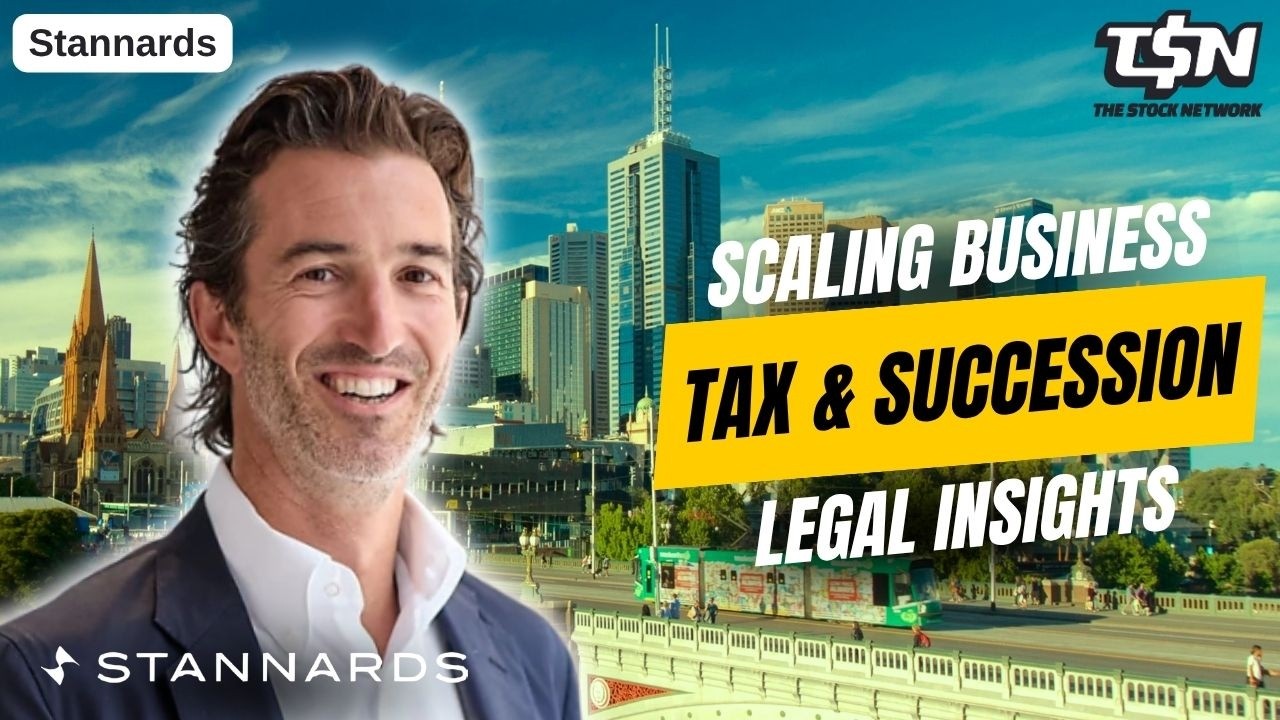
Transcription of The Stock Network Interview with Stannards, Managing Director Peter Angelini
Lel Smits: Peter Angelini is Managing Director of Standards, a multidisciplinary accounting and advisory firm supporting businesses through audit tax, external CFO services, R&D, corporate advisory and valuations. Ahead of appearing at StocksOnLocation, Peter joins me to discuss tax efficient business structures, successful succession planning and the lessons behind Standards’ rapid expansion, including around 50% revenue growth and an increase in its team from 75 to 120 people over the past two years.
Peter, welcome to The Stock Network.
Peter Angelini: Thank you for allowing me to talk.
Lel Smits: Now, with significant tax changes being proposed and enacted, why do you think corporate and family groups should consider their tax structures well before a growth, succession or exit event? And also, what do you think shareholders should be doing now to ensure their personal structures remain tax efficient?
Peter Angelini: Well, look, definitely getting advice and being proactive. The recent changes in the budget were probably the most substantial changes we’ve had in our tax system since GST came in 26 years ago.
So, by the admission of the Institute and the governing bodies and even Treasury, what government initially proposed was definitely not perfect and does contain some errors and some areas that need revision and need further consideration. Having said that, we do have certainty on certain aspects of it. So, you know, things like capital gains tax and minimum taxes, you know, percentage taxes on capital gains is a key topic for investors.
The fact that the government’s made it very clear that they want trusts to pay tax or, again, treat, you know, trusts somewhat like companies, it’s really all about trying to raise that minimum threshold of tax that, I guess, family groups have typically enjoyed over a number of years where there’s been the ability to stream income to lower taxed beneficiaries. So, the whole landscape’s changed a lot. From a corporate perspective, you know, that’s probably largely unchanged, depending on what size you’re at now.
If, you know, from start-ups to more mature businesses, companies are companies and there hasn’t, you know, there are nuances to the company rules, whether you’re a small company or a large company, but we’re really talking about trusts and trusts are typically the vehicle that many investors use to hold investments in the companies that, you know, are part of this organisation or this group or on, you know, the Australian stock market or even overseas. So, and depending on the level of wealth and the level of investment capacity that families have, the tax changes can be very significant, you know, modelling out different scenarios can be quite significant. So, tax and structuring is definitely the hot topic of the moment and is something that we advocate, both corporates and also investment families, investment groups should put to the top of their list, not only, you know, in June next year, but as an ongoing part of the way they operate and their investment decisions.
Lel Smits: Absolutely. And Peter, in terms of succession and scaling successfully, you succeeded your father as Managing Director after he led Standards for around 30 years. Can you outline for us what you think made that transition successful? And also, how have those lessons influenced Standards growth since partnering with Pember Capital in 2024?
Peter Angelini: Yeah. Yeah. Well, look, I mean, succession is something that a lot of groups try and do, need to do, and many typically fail or don’t do it well. You know, you see it in footy clubs with coaches and sometimes it goes bad and sometimes it goes well.
Business is no different. You know, I think communication and transparency is paramount. It’s, I guess, how I’ve operated and how I encourage everyone to operate.
I think if you communicate, you’re clear and you’re transparent and truthful, that’s obviously, that’s a great start. In terms of my specific scenario, yeah, my father was leading our practice and it was time for me to take over around kind of just after COVID ended and I prepared a paper to him. He initially didn’t take it that well.
He thought I was stabbing him in the back, which I said, I’m not, I’m actually presenting it to you. So that’s the opposite of stabbing in the back. But, you know, I think the point is that a lot of founders and people who’ve been in a position for a long time, they, you know, they’re not ready to let go and it doesn’t matter how old they are or what stage they, you know, for a lot of them, it’s their baby, it’s their business.
And so it’s really important to do it in a respectful way and to demonstrate that it’s not a reflection of their capability or skillset. Clearly, it’s just that times change, you know, in our space and in obviously everyone’s space, COVID happened and the employment market shifted and technology is ramped up. So the leadership approach that you need is, you know, is different or does change over time.
So I think it’s important that businesses recognise that. In terms of our specific business, yeah, we’ve really accelerated our growth over the last couple of years off the back of some private equity investment. And really the catalyst for that and how we’ve scaled and why we’ve scaled is investment in people and we’re a people-based business, so we’re only as good as our people.
And so we’ve gone very heavy in investing in and trying to attract and retain the very best people that we can. And I think if you do that, you’re going to be in professional services at least, you’re going to obviously be, you know, set up for success. So we, you know, in the professional services space, a lot of us are ex big four, I’m ex Deloitte, my partners are ex PwC, KPMG, whatever, great firms, but, you know, their churn rates sit at around 30 to 40 percent.
So, whereas ours are, you know, typically around 10 percent. So that means that our staff stay for longer, they’re more engaged and we have less turnover, which then means more stability in servicing clients. So it’s a people business.
I think, as I said, to scale a people business, you need to attract and retain the very best.
Lel Smits: Well, Peter, great to hear an update from Standards and look forward to hearing more at Stocks on Location in a few weeks time.
Peter Angelini: Thanks very much and I appreciate you giving me some time to talk to everybody.
Ends