
- The first-in-human trial returned a favourable safety profile, with the cream staying local and no systemic exposuredetected.
- Extension study planned to commence in Q1 2027, with approximately 15 patients to be enrolled.
- First efficacy signals due mid-year and full results by the end of 2027.
- Merck KGaA and Biogen are chasing the same immune target with pills. Noxopharm’s is a cream, applied to the lesion itself.
- Noxopharm values the cutaneous lupus market at US$6 billion by 2034, inside a broader inflammatory skin market worth US$56 billion.
A disease with limited targeted treatment options
Lupus is an autoimmune disease, which means the immune system turns on the body it is meant to defend. It can attack skin, joints or kidneys, and it looks different from patient to patient.
In cutaneous lupus erythematosus (CLE), the target is skin. Red, scaly, coin-shaped patches surface on the places that catch the most sun. Mostly the face, scalp and ears. Left to run, it can cause permanent scarring. Sufferers can be left with discoloured skin and bald patches where hair never grows back.
It’s not rare.
A study in Mayo Clinic Proceedings tracking four decades of US medical records put the prevalence at roughly 109 cases per 100,000 people. About three in four patients are women.
For many the disease does not stay on the surface. A 2025 systematic review pooling more than 2,000 adult cases found around a quarter went on to develop systemic lupus, the form that attacks organs.
What patients get offered has barely moved in two generations. Most are treated with steroid creams or hydroxychloroquine, a drug first developed for malaria. Only two medicines carry formal US approval for the disease, both approved under regulatory frameworks that predate modern clinical trial standards. Dermatology researchers writing in the Journal of Dermatology in 2024 counted more than 60 years without a single new approved systemic treatment.
The cost of that shows up in how patients rate their own lives. Work published in the Journal of the American Academy of Dermatology found people with cutaneous lupus scored their quality of life worse than patients with acne, non-melanoma skin cancer or hair loss.
Noxopharm (ASX:NOX), a Sydney-based clinical-stage biotech, has spent years developing a drug aimed squarely at that gap. On 14 September 2026 it confirmed it is progressing to its first study in patients with CLE.
A target the rest of the industry is backing
The drug, SOF-SKN, is delivered in the form of a cream. It acts on a pair of immune receptors known as TLR7 and TLR8. They work like alarm sensors inside immune cells. In lupus they misread the body’s own material as a threat, and the inflammation that follows is what wrecks the skin. Applied directly to a lesion, the cream is designed to switch them off in that patch alone, rather than damping the entire immune system the way a tablet does.
The target itself is no punt. Germany’s Merck KGaA has been recruiting since April 2026 for a Phase 3 trial of enpatoran, an oral TLR7/8 blocker, in 202 lupus patients with skin involvement. Biogen’s litifilimab, which works a step upstream on the same inflammatory circuit, won FDA Breakthrough Therapy Designation for cutaneous lupus in January 2026. After decades of nothing, serious money is converging on the disease.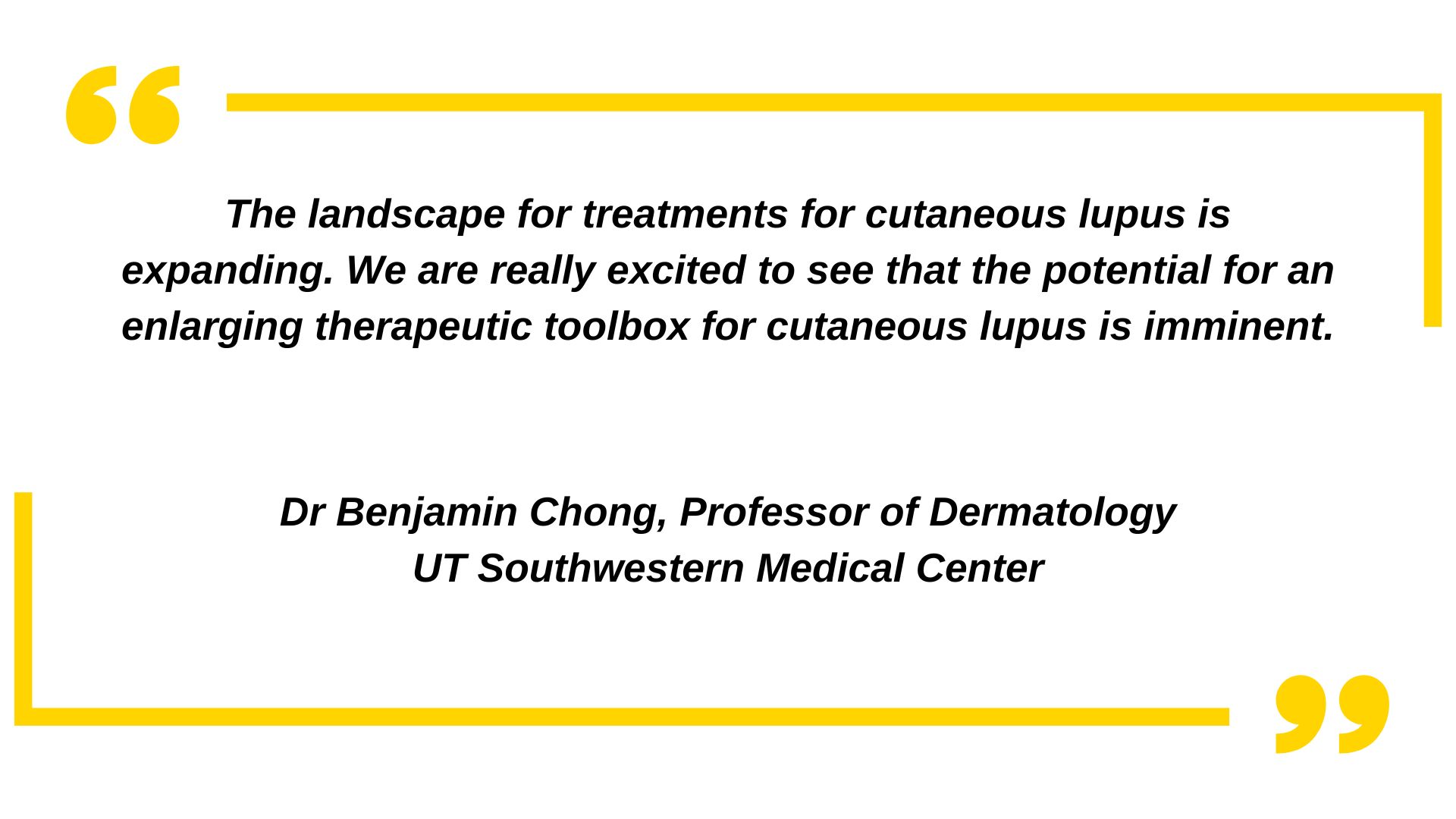
Noxopharm’s angle is delivery. Where the others are building pills, its candidate goes on the skin. Preclinical work put its half-life in the skin at about three and a half days, and in animal models of skin inflammation it held redness and scaling well below untreated controls. In the human trial, exposure stayed local, with none of the drug detected in the bloodstream.
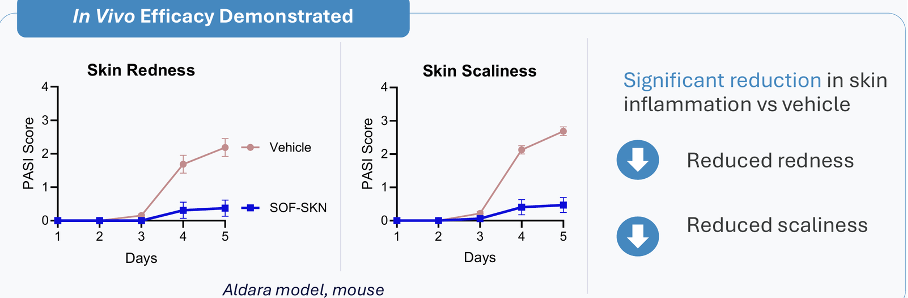
Skin inflammation, treated versus untreated mice. (Source: Noxopharm)
Into patients for the first time
The cream cleared its first human test in January 2026, in a trial called HERACLES that dosed healthy volunteers to measure safety and side-effects. It came back with a favourable safety profile.
The planned extension study will be the first test in people who actually have CLE. Around 15 patients in Melbourne will each be given 14 days of daily dosing and a week of monitoring afterwards.
Enrolment is due to start in the first quarter of 2027. Early signs of efficacy are expected around the middle of the year, with a full readout covering safety, tolerability and efficacy signals due by the end of 2027.
Expected to lead the study is Associate Professor Amanda Saracino, a dermatologist who founded and runs the connective tissue disease clinic at St Vincent’s Hospital in Melbourne and holds an academic post at University College London.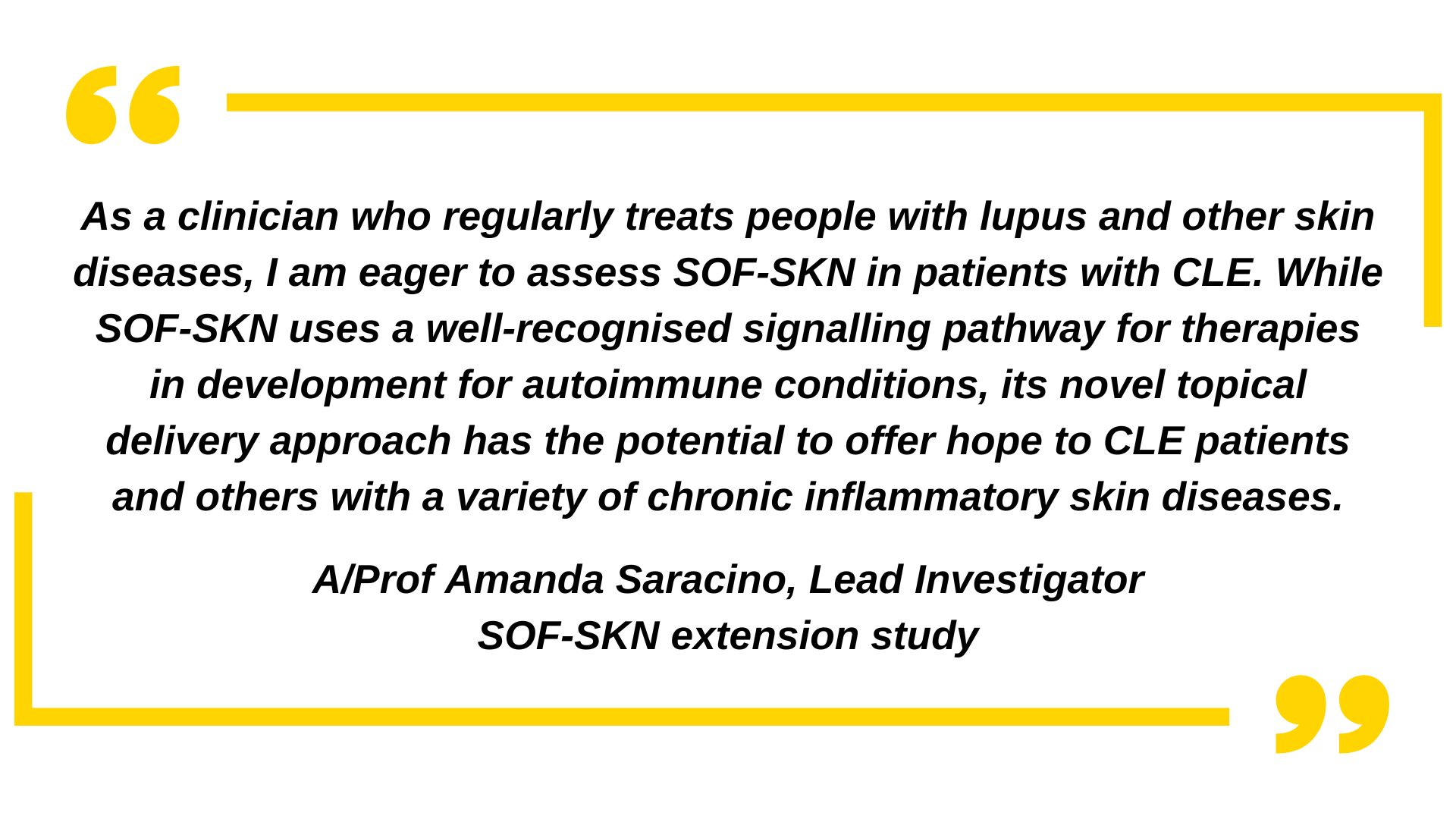
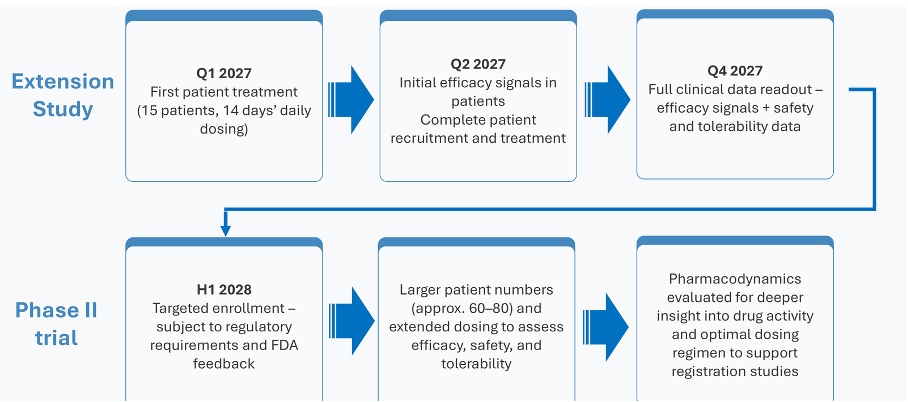
Extension study and planned Phase II timeline. (Source: Noxopharm)
One technology, two different jobs
What makes the platform behind the drug worth a look is that it does not only do one thing. Sofra, as Noxopharm calls it, uses synthetic genetic material designed to imitate the body’s own switches for turning inflammation on and off.
The same approach can be tuned in either direction, quieting an immune response that has become overactive, or provoking one where the body has failed to react at all.
The lupus cream is the first kind. A separate, earlier-stage cancer program is the second.
In August, researchers working with the company published lab results showing cancer cells barely register with the immune system when left alone. Add the company’s experimental amplifier and immune cells called macrophages spring into action, producing seven times the activity seen without it.
Lel Smits of The Stock Network sat down to chat with Noxopharm CEO Olivier Laczka.

It is early work, years behind the lupus program, and it’s not happening in isolation. The underlying science was validated in a peer-reviewed paper in Nature Immunology in February 2026.
The broader thesis got a real-world push in August, when an mRNA cancer vaccine paired with the checkpoint drug Keytruda cut recurrence in melanoma patients. It was the first Phase 3 win for an mRNA cancer therapy of any kind.
What happens next
The near-term story is the skin cream, not the cancer program.
Subject to what the extension study finds, Noxopharm plans a larger Phase II trial in the first half of 2028, testing 60 to 80 patients over a longer dosing period.
The company has identified CLE as a potential Orphan Drug Designation opportunity for SOF-SKN. If granted, the designation carries additional regulatory support for treatments aimed at diseases with few options.
It sizes the prize well beyond that first indication, valuing the cutaneous lupus market at around US$6 billion by 2034 and the broader inflammatory skin disease market it could expand into at US$56 billion. Psoriasis, vitiligo, rosacea and alopecia areata are among the conditions it lists as candidates for the same cream.
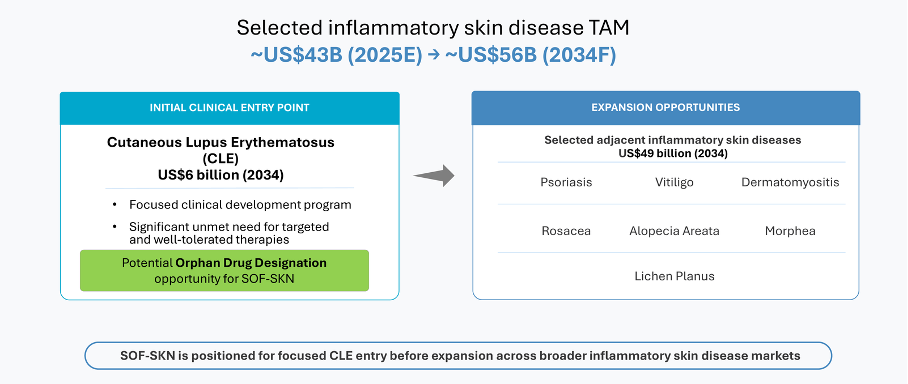
Market sizing beyond cutaneous lupus. (Source: Noxopharm)
The first real answer, on whether a drug that proved safe in healthy volunteers can help the patients it was built for, is due by the end of 2027.
This article was produced in collaboration with the company featured and the information provided is for general information purposes only and should not be considered financial advice. Readers should consider their own circumstances and seek independent professional advice before making any investment decisions.