
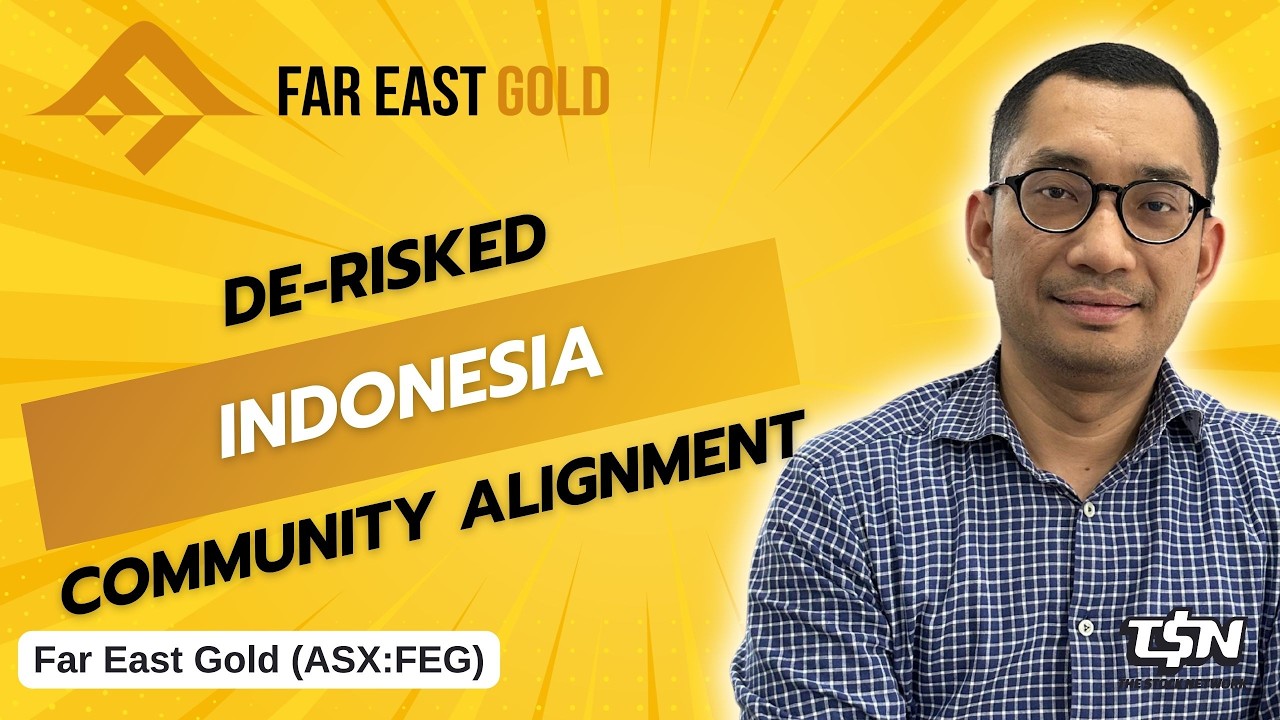
Transcription of The Stock Network Interview with Far East Gold (ASX:FEG), Country Director and Co-Founder Jimbarlow Gultom
Lel Smits: Far East Gold is advancing a portfolio of copper and gold projects across Indonesia and Australia underpinned by combined JORC resources of gold and copper. In Indonesia, the company continues to deliver high-grade drilling results at Heidenberg while progressing permitting milestones under the country’s evolving mining framework. I’m joined today by Country Director and Co-Founder Jimbarlow Gultom who leads Indonesian operations, government engagement and community relations from Jakarta.
And he will be discussing how Far East Gold is positioning itself within Indonesia’s centralized mining regime, strengthening stakeholder relationships and advancing operations on the ground. Jim, welcome to the Stock Network.
Jimbarlow Gultom: It’s good to be here.
Lel Smits: Now, Indonesia has introduced significant reforms in recent years, including more centralized decision-making in mining approvals. Can you outline from your perspective with Jakarta there in the background, how is Far East Gold positioning really within this updated regulatory structure?
Jimbarlow Gultom: Yes, so Far East Gold is pretty much well positioned within Indonesian evolving mining framework because, again, we’ve built our operating model around regulatory alignment, three things, right, local partnership and the last thing is the discipline compliance. So, strong regulatory engagement, including the proactive transparent communication within the relevant authorities.
For instance, for the reporting approvals and documentations. And the local operating capability, the second one, we basically have an experience in country team and partners, like contractors and all, who understand the practical expectation of the current framework, the regulatory framework. So, yeah, governance and ESG disciplines also, we treat that environmental and social compliance as critical items and overall the reforms, I believe, will help differentiate serious government companies.
And Far East Gold is well positioned to benefit from that shift. So, for our investors, this translates into jurisdictional re-skimming and also improved line of sight on approvals, on various permittings and clear pathways to advance our project from what are currently doing explorations through development.
Lel Smits: Excellent. Now, when it comes to government and community, you head up the government and community engagement in Indonesia. Can you explain how Far East Gold has integrated itself both provincially and at national levels and also in general, what do good community partnerships look like in practice?
Jimbarlow Gultom: Yeah, the key for us in Far East Gold is, you know, the mindset is the government engagement and the community engagement is not treated as a compliance requirement. So, we regard that those two things as a core strategic pillars of how we operate here in Indonesia.
So, as of the engagement at the provincial level, we always focus on the early alignment with the government development priorities. That means ensuring our project plans consistent with the original economic goals, infrastructure planning, and employment strategies. So, you know, we have to maintain open and continuous dialogue, you know, communication closely with provincial authorities, districts, and, you know, of course, the central government.
So, this will provide, you know, transparent updates on our exploration activities and environmental management, forestry management, and the workforce development. So, this proactive engagement will eventually build trust and avoid surprises to, you know, to make sure that this is a very critical thing that we have to have in this Indonesian evolving regulatory environment. So, in the local community level, again, this approach is relationship-driven and very long-term oriented, pretty much.
So, yeah, I can give you example, like in Aceh, like I said, you know, we invest time in understanding local leadership structure, customary land considerations, and the community expectations before we even advancing our projects activities.
Lel Smits: And, Jim, when it comes to operational execution, with drilling underway at Sewer and Earth North Bermal, and broader plans now really progressing across your Indonesian portfolio, what does it take operationally to coordinate multiple work programs within Indonesia?
Jimbarlow Gultom: Well, it basically requires a couple of things, or three things. Discipline planning, strong in-country leadership, very key. And, yeah, type, cost and risk control, right? So, like you said, drilling underway in Sewer, and right now in Sewer, and, you know, in the past we did also in North Bermal, and we are planning to get into Trangalek in East Java. So, we build an operating platform which actually designed, you know, for parallel execution. So, rather than running projects in isolations, you know, we operate under centralized Indonesian management here in our office here in Jakarta, to oversee permitting, logistics, contractors, management, community engagement, and obviously HSE standards across the portfolio.
So, that means, you know, strong leadership, like I said, we maintain experienced side teams supported by here centralized technical oversight. This is very important to ensure consistent geological standard, drilling key HSE protocols, you know, and real-time data flow, you know, back to this office and eventually to the decision makers. And secondly, you know, integrated logistics, very key, and also contractor management.
Like, you know, Indonesia presents geographically and infrastructure challenges. So, coordinating contractors, you know, supply chains and mobilization schedule centrally, we reduce downtime. That’s the aim, and, you know, also optimize equipment utilizations across all our projects.
So, you know, another thing is regulatory and community synchronization. We have experience before in HSE, so we try to use that model and apply it to our other projects. So, we can save, you know, a lot of times and cost.
Lel Smits: Yes. And finally, Jim, really, when it comes to positioning Indonesia as an investment destination for investors who may still perhaps perceive Indonesia as opaque or higher risk, what would you say to them to better understand the current investment environment?
Jimbarlow Gultom: Yeah, there’s no doubt that Indonesia, you know, often perceived as complex. But to me, complexity and risks are just not the same thing, right? So, in fact, over the past maybe 10, 15 years, Indonesia has moved decisively towards, you know, greater regulatory clarity, centralized oversights, and also stronger governance in the mining sector, especially this current government.
So, and also today, the investment environment is significantly more structured than many, you know, investors actually realize. So, the government has prioritized mining and, you know, and other resources as a strategic pillar of national development. This is no secret.
And that actually translates into clearer policy direction and more consistent licensing processes and also stronger institutional coordination. This is very important because in the past, if you’re talking 20, maybe 15 years ago, the coordination is, yeah, it’s not that good, right, in terms of local government and central government. So, they have their own, sometimes the align with the central government.
So, now it’s much, much better, you know, situation. Secondly, Indonesia remains one of the world’s most prospective geological terrains, right? So, it hosts the tier one mineral belts and world-class deposits. So, this, you know, very good opportunity yet remains under explore relative, obviously relative to its potential.
So, for investors, this creates a compelling risk versus reward dynamic, understandably. So, strong upside potential within the increasingly, you know, formalized regulatory framework. So, lastly, like you said, the capital market perception often lacks on the ground reality.
So, we are on the ground. So, we understand fully and companies that, you know, have established local operating capacity like us, government relationships and community alignment are able to navigate all this, you know, environmental environment effectively. So, in many ways, the jurisdictions now rewards discipline operators, you know, explorers, while, you know, filtering out some, you know, speculative participants.
Lel Smits: Well, Jim, I really appreciate the time you’ve taken to explain this incredibly interesting and evolving area of doing business and mining in Indonesia and look forward to speaking with you again.
Jimbarlow Gultom: Thank you, Lel.
Ends