
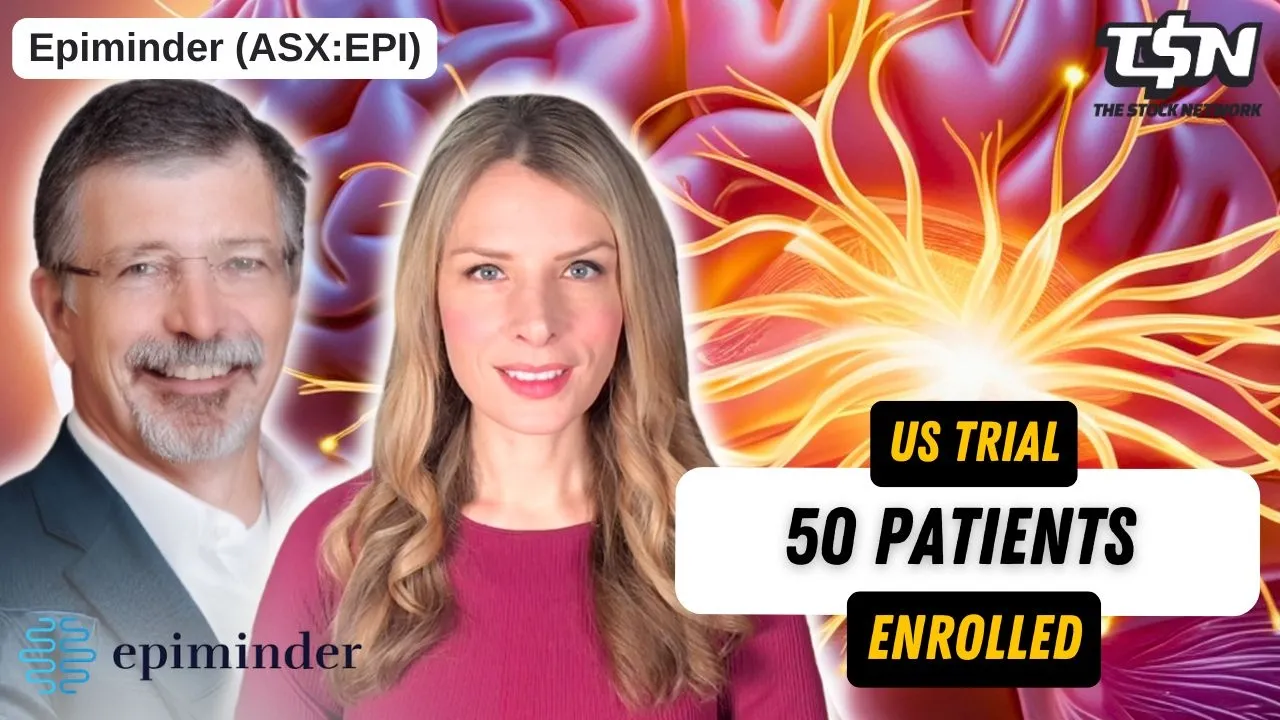
Transcription of The Stock Network Interview with Epiminder (ASX:EPI), CEO Rohan Hoare
Lel Smits: Epiminder is a medical device company developing the FDA-approved Minder system, a monitoring technology designed to improve the diagnosis and management of epilepsy. The company has now achieved its 50th patient enrollment in the landmark DETECT clinical trial ahead of schedule, with 20 leading U.S. epilepsy centers, including Mayo Clinic, Harvard, Stanford, Yale, Duke, and the University of Pennsylvania, actively recruiting patients as the study builds momentum towards its target of 210 participants. I’m joined today by Epiminder CEO Rohan Hoare to discuss why accelerating enrollment in DETECT is an important validation of the Minder system and what it could mean for the company’s commercial opportunity.
Rohan, welcome back to the Stock Network.
Rohan Hoare: Well, it’s good to be back again. We were just doing this six weeks ago and we’re back at it.
Lel Smits: Absolutely. Certainly a lot of progress since then. DETECT has now reached 50 patient enrollments ahead of schedule.
Congratulations, with some of the world’s leading epilepsy centers now actively participating. Rohan, what does this momentum really tell you about the clinician confidence in the Minder system? Also, why do you think there’s such a significant unmet need for this better epilepsy monitoring?
Rohan Hoare: Let me start with the unmet need. Epilepsy and seizures are often infrequent and unpredictable in their timing.
When you bring an epileptologist brings a patient in for monitoring in an epilepsy monitoring unit for two or three days, there’s a fair to good likelihood that, in fact, they won’t actually see anything. Some 30% to 50% of the inpatient visits result in what’s called an inconclusive monitoring session. You don’t see anything.
What that’s really saying is you have to monitor for a much longer period of time to get the answer. That’s where Minder comes in because it can be implanted and monitored for weeks and months and even years. We get a much longer window to be able to see what’s going on in the brain and get a result.
I think that is really why the clinicians are very, very excited about this because this is extending their diagnostic window in a way they’ve never been able to do before. I think that drives their enthusiasm and the momentum in the study.
Lel Smits: Yes.As Detect progresses now towards its target of 210 patients, what are the key milestones that you think investors should be watching? Also, how do you think this positive clinical data could help drive that broader adoption of the Minder system in the U.S. healthcare market?
Rohan Hoare: I think what it first of all does is it’s demonstrating the need that’s out there because clinicians are going, yes, we have patients that would benefit from Minder device and we’re seeing them being enrolled in the trial. I think that really is a validation of the market and the market potential. In terms of milestones and things to look for, really three categories.
One would be in the Detect program. We’re announcing today that we’ve got 50 enrollees just six weeks after we announced 25. Clearly, momentum there.
100 would be the next big milestone to look at and that’s basically half the study done. That would really be, I think, breaking the camel’s back in terms of the work. Then the other two pieces of preparation are the next generation product.
I would say the investor should look for us moving out of detailed design and into verification of the device. That’s the next phase just before it’s ready for submission to the FDA. Then the third piece would be the early commercialization opportunities.
Now that we’re starting to really get a lot of momentum behind the Detect trial, we’re turning our attention a little bit more to these early proof points in the marketplace. I’d encourage investors to be looking at that down the road as well.
Lel Smits: Fantastic. Really looking closer at the backing that you are getting, the study now includes world-renowned institutions, including Mayo Clinic, Stanford, and Yale. What do you think this really shows you about the caliber of those participating centers? What is this saying about the potential of the minder system? Also, the significance of the Detect trial?
Rohan Hoare: Clearly, these centers are on the forefront of epilepsy research. I think for them to be eagerly participating and working with us on this, and in such a broad cohort of these centers, really indicates that they see a significant gap in their diagnostic armamentarium.
They see the minder device can really fill that gap to give them this knowledge where they otherwise are just speculating as to what’s going on. With the minder device, they can actually know what’s going on. I think this is the key is we’re going from a subjective understanding to an objective understanding by utilizing the power of the minder device.
Lel Smits: Rohan, thank you for the update from Epiminder and congratulations on the milestone.
Rohan Hoare: Thanks a lot, Lel. Hopefully, I’ll see you again soon.
Ends